
Author: clinicalebooks

  • Nursing Textbooks by Study Goal: Medical-Surgical, Skills, Research and NCLEX

    Nursing students need different textbooks for different learning tasks: understanding adult health, practicing clinical skills, studying maternal and newborn care, developing research literacy and preparing for examination-style questions. This guide compares recently listed ClinicalEbooks titles according to those purposes, with links to the individual editions.

    Build your adult health and medical-surgical nursing foundation

    Lewis’s Medical-Surgical Nursing, 12th Edition is a comprehensive reference organized around the assessment and management of clinical problems. A learner studying adult patient care can use a broad text as the framework for connecting body-system knowledge with nursing assessment and care priorities.

    Broad nursing titles may overlap. Rather than selecting several that do the same job, use your program’s reading list and compare editions, learning objectives and chapters. Our Medical-Surgical Nursing reading guide offers a wider path through the subject.

    Separate clinical skills from medication calculation practice

    Clinical Nursing Skills and Techniques, 10th Edition focuses on nursing procedures and technical skills as a learning resource. Use it to understand the rationale, safety considerations and terminology associated with assigned skills. Written descriptions cannot replace supervised practical instruction or institutional procedures.

    For quantitative practice, Calculate with Confidence, 7th Edition provides a different learning role: medication and dosage calculations. Students should work through units, conversions and checking methods alongside their required training and safety protocols.

    See the Pharmaceutical Calculations reading guide for a related reading path. Nursing dosage calculations and broader pharmacy calculations can share mathematical ideas without having identical course objectives.

    Plan maternal, newborn and pediatric nursing reading

    Maternal Child Nursing Care, 7th Edition spans maternal and child topics, while Maternity and Women’s Health Care, 13th Edition focuses its study direction around women’s health and maternity care. Davis Advantage for Maternal Newborn Nursing, 4th Edition offers another course-specific maternal-newborn resource.

    Choose based on whether the syllabus calls for prenatal and birth-related care, newborn assessment, women’s health or pediatric material. These titles are not automatically interchangeable. The Maternal and Newborn Nursing reading guide and Pediatric Nursing reading guide help navigate the related specialty shelves.

    Strengthen nursing research and evidence appraisal

    For research appraisal, Essentials of Nursing Research, 10th Edition belongs in a different part of a reading plan from clinical skills or adult health. It helps students focus on how evidence is developed, read and evaluated for academic nursing work.

    Research Design: Qualitative, Quantitative, and Mixed Methods Approaches, 6th Edition broadens that learning route with a general research methodology perspective. Students can compare research questions, sampling, designs and claims before evaluating the implications of findings.

    The Nursing Research reading guide provides more context about research-focused study resources.

    Use exam preparation as an application stage

    Prioritization, Delegation, and Assignment: Practice Exercises for the NCLEX-RN Examination, 5th Edition targets a more specific preparation goal than a broad medical-surgical nursing reference. It can be used as part of an application-and-practice stage after the foundational reading required by a program.

    Do not assume that an older exam-preparation edition fully reflects a current test plan. Check current licensing exam information and your program’s instructions. For other exam-oriented study materials, visit the NCLEX Preparation reading guide.

    A practical order for using these nursing references

    1. Core knowledge: identify the patient group and choose one broad nursing foundation text.
    2. Focused practice: add a skills, calculations or maternal-newborn reference only when the coursework calls for it.
    3. Research literacy: use research and evidence-appraisal material to distinguish types of findings and their limitations.
    4. Application: complete supervised skills learning and examination-style exercises appropriate to your training stage.

    A clear reading plan should map individual titles to learning outcomes, not simply accumulate books. Check the named edition and supplied-file details before selecting a listing.
    Related reading guides

  • Emergency Medicine, Clinical Procedures and Critical Care: Textbook Reading Guide

    Emergency medicine, bedside procedures, critical care and eye emergencies are related but distinct learning areas. The most useful textbook depends on the question you are studying. This guide connects newly listed ClinicalEbooks references with the broader emergency and intensive-care reading shelves.

    Choose a broad emergency medicine reference first

    Tintinalli’s Emergency Medicine: A Comprehensive Study Guide, 8th Edition can serve as a broad reference for learners organizing presentations, assessment principles and emergency medicine topics. Its scope differs from a book focused primarily on individual procedures or a single organ system.

    Begin with a defined study question such as the assessment of an undifferentiated complaint, the role of a particular investigation or a clinical presentation seen on placement. Separate foundational mechanisms and reasoning from the practical steps of a procedure. This prevents procedural material from being read in isolation.

    If you are comparing editions, verify the specified eighth edition rather than assuming the page describes the latest available version. Book contents and practice recommendations can differ over time, particularly in urgent-care settings.

    When a procedural reference adds value

    Roberts and Hedges’ Clinical Procedures in Emergency Medicine and Acute Care, 7th Edition addresses a different reading purpose from a broad emergency medicine textbook. It belongs in a focused study route for understanding procedural indications, anatomy, risks and discussion of techniques.

    For educational reading, start with the clinical problem, then identify why a procedure is considered, which anatomical structures are relevant, what alternatives are discussed and what limitations apply. Do not treat written procedural descriptions as authorization or training to perform interventions. Practical competency requires appropriate supervision, institutional protocols and professional qualification.

    The Primary Care reading guide offers another route for general assessment and longitudinal clinical topics. Emergency and primary-care references overlap in some presentations, but differ in setting, urgency and intended reading goals.

    Use a focused ophthalmology manual for ocular topics

    The Wills Eye Manual, 9th Edition is a specialist ophthalmology reference framed around office and emergency-room diagnosis and treatment of eye disease. It can complement rather than replace a broad emergency medicine textbook when an assigned topic concerns ocular anatomy, presentation and evaluation.

    For broader ocular disease study, see the Ophthalmology textbooks and reading guide. Use the specialist text for the level of detail required by your course and verify time-sensitive clinical recommendations against current professional guidance.

    Move from emergency assessment to intensive-care concepts

    Critical care textbooks can extend learning about serious illness after an initial assessment framework is established. Irwin and Rippe’s Intensive Care Medicine, 9th Edition provides a broad intensive-care reading direction, while Principles and Practice of Mechanical Ventilation, 3rd Edition narrows the scope to ventilation science and practice.

    For another comprehensive critical care resource, compare Hall, Schmidt and Wood’s Principles of Critical Care, 5th Edition. A book on ventilation should generally be selected for a specific course objective rather than as the only textbook for a full intensive-care syllabus. Readers who need topics such as kidney support can follow the Nephrology guide for connected references.

    Build a four-part emergency and critical-care reading plan

    1. Presenting problem: define the emergency medicine question and review its underlying science in a broad reference.
    2. Clinical setting: decide whether your topic concerns general assessment, a procedure, an ocular complaint or an intensive-care issue.
    3. Specialist reading: use one targeted book to clarify the assigned topic; record how its scope differs from the broad textbook.
    4. Evidence review: check recommendations that may have changed since the book’s edition against current local protocols and appropriate professional sources.

    Using a broad-to-focused sequence helps reduce redundant reading. For example, a learner studying the academic principles of an urgent eye presentation can start with an emergency medicine overview, then work through the relevant sections of an ophthalmology reference. A student studying ventilation may instead pair broad intensive-care content with a focused respiratory text.

    Related ClinicalEbooks reading guides

  • Cardiology and Echocardiography Textbooks: A Focused Reading Plan

    Cardiovascular textbooks serve different purposes. A broad reference helps you connect mechanisms and disease, while echocardiography manuals focus on image interpretation and the questions that cardiac imaging can address. This reading plan compares current ClinicalEbooks listings by their educational role—not by a claim that one book is best for everyone.

    Start with the scope of your cardiovascular question

    For a long-form cardiovascular reference, Braunwald’s Heart Disease, 12th Edition (2-Volume Set) is a broad starting point. Its role in a reading list is different from a short imaging manual: it can supply the clinical and scientific context for a question that you will later investigate in a focused book.

    Fuster and Hurst’s The Heart, 15th Edition (2-Volume Set) is another comprehensive cardiovascular reference. When choosing between two extensive works, compare the table of contents and the teaching required by your program; owning both is not necessary for every learner. Identify the exact disease, investigation or topic that needs deeper reading.

    For a chapter-based workflow, write one question in advance: what physiological principle underpins this finding, which tests characterize it, and where would a specialist text provide more focused discussion? This is more productive than treating an extensive reference as a book to read straight through during a short rotation.

    Choose echocardiography books for distinct learning tasks

    The Echo Manual, 4th Edition is suited to readers seeking a compact echocardiography reference. For broader, sustained study of cardiac imaging, compare Feigenbaum’s Echocardiography, 8th Edition with ASE’s Comprehensive Echocardiography, 3rd Edition. Their titles describe a shared field, but they need not play the same role in a course or clinical training program.

    Advanced imaging topics deserve their own reading objective. ASE’s Comprehensive Strain Imaging, 1st Edition is a more focused choice for studying strain imaging than an introductory survey. Begin with acoustic principles, anatomy, image orientation and routine measurements before moving to specialized image-analysis concepts. Formal acquisition and clinical interpretation require supervised training and current professional guidance.

    When deciding between editions, check whether the book emphasizes foundational techniques, interpretation of examples, detailed methodology or a narrow imaging application. The product pages identify the exact listed edition; a publisher’s supplementary platforms or codes should not be assumed to be part of a PDF listing.

    Move into valvular disease, prevention and electrophysiology

    Once the broader concepts are established, specialist companions can be selected according to a defined question. Valvular Heart Disease: A Companion to Braunwald’s Heart Disease, 6th Edition provides a dedicated valve-disease reading direction, whereas Preventive Cardiology: A Companion to Braunwald’s Heart Disease, 1st Edition is organized around prevention.

    For readers studying rhythm mechanisms and electrophysiology in depth, Zipes and Jalife’s Cardiac Electrophysiology, 8th Edition belongs on a different branch of the reading map. Avoid using one specialist volume as a substitute for the broad cardiovascular material your course expects.

    A practical four-step reading sequence

    1. Define the goal. Choose a topic such as cardiac physiology, an imaging technique, valve disease or a rhythm-related mechanism.
    2. Establish the foundation. Use a general cardiology reference for the anatomy, physiology and clinical setting.
    3. Study the method or specialty. Select one imaging, prevention, valve or electrophysiology text according to the unresolved question.
    4. Compare and revisit. Make a short matrix of terminology, findings and limitations across chapters, and cross-check time-sensitive recommendations against current professional sources.

    For example, a reader learning about echocardiographic assessment can pair a broad cardiovascular chapter with the relevant section in an imaging reference, then use a focused work only if the course reaches that level of detail. The sequence is a study method, not an instruction for patient care.

  • Otolaryngology: Textbooks and Reading Guide

    Otolaryngology connects ear, nose, throat and head-and-neck science with clinical assessment and surgery. This category currently contains one dedicated reference: Cummings Otolaryngology: Head and Neck Surgery, 7th Edition. Use this guide to place that extensive specialty text within a focused reading plan.

    Who should choose Cummings Otolaryngology?

    The seventh edition is an extensive, multidisciplinary otolaryngology reference for specialty study, including residency and board preparation. Choose it when you need sustained discussion within the specialty rather than a short introduction to a single head-and-neck topic.

    For an early learner, anatomical orientation should come first. An anatomy text or atlas helps explain the structures a specialty chapter assumes you recognize. Audiology offers a more focused learning route for hearing assessment, while a general surgery text places operative decision-making in a wider surgical setting.

    A reading route through this book

    1. Identify the anatomical region and the clinical or surgical question.
    2. Review the normal structures and function needed to understand the specialty discussion.
    3. Read assessment and disease mechanisms before comparing the chapter’s management or operative approaches.

    Read by clinical question rather than by volume size

    Begin with a specific learning objective from your course, rotation or specialty program. Translate it into a question that the relevant chapter can address. This gives an extensive reference a manageable purpose for one reading session.

    Make a diagram of the important structures before summarizing the disease discussion. Mark the structures whose relationships you cannot yet explain and revisit the Anatomy guide or your assigned atlas. Then connect the anatomical explanation with the history, examination or investigation being discussed.

    When reading a surgical topic, separate why an approach is considered from how the approach is described. Record the intended goal, the anatomical constraints and the complications discussed in the text. This supports supervised learning; reading a technical account does not provide practical competence.

    Finish with a short comparison of the available approaches within that chapter. State the reason for each distinction rather than compiling a disconnected list of procedures. Use current specialist guidance when recommendations have changed since the edition’s publication.

    The Otolaryngology title in this category

    Browse the Otolaryngology category. Related anatomical, hearing-science and surgical references are available through the subject guides below.

    Bibliographic source: Elsevier’s seventh-edition description. Reading suggestions are editorial guidance prepared by ClinicaleBooks.

  • Gastroenterology: Textbooks and Reading Guide

    Gastroenterology reading connects digestive physiology with symptoms, investigation and disease mechanisms. This category currently contains one dedicated reference: Yamada’s Textbook of Gastroenterology, 6th Edition. This guide explains how to use that reference alongside the wider medicine and pathology shelves.

    What Yamada’s Textbook adds to a gastroenterology reading list

    The sixth edition, edited by Daniel K. Podolsky and colleagues, combines digestive and liver science with clinical gastroenterology. Its extensive scope makes it a reference for investigating a defined topic, rather than a compact summary to read cover to cover before a short placement.

    A general internal medicine textbook can establish the broader clinical setting. Yamada’s is the next reading step when you need a more sustained explanation of a gastrointestinal or liver problem. A surgical pathology reference addresses tissue interpretation from a different professional perspective.

    A reading route through this book

    1. Define the symptom, mechanism or organ-system question you want to understand.
    2. Review the relevant normal physiology and disease mechanism before the clinical discussion.
    3. Connect the chapter’s investigation and management discussion with the evidence and publication context it cites.

    Turn a reference chapter into an active reading session

    Write a short question before opening the book. For a symptom-based topic, separate the presenting problem from possible disease mechanisms. For a mechanism-based topic, ask how a change in normal function could explain the clinical findings being discussed.

    As you read, build a three-column note: normal function, disease-related change, and the observation or investigation that helps characterize the change. This makes it easier to distinguish an explanatory model from a diagnostic result.

    Finish by returning to the original question. Summarize the explanation in your own words and identify which part still requires another source. Use the Internal Medicine guide for broader clinical context, or Pathology for the tissue and laboratory perspectives. Clinical decisions require current guidance and the appropriate professional assessment.

    The Gastroenterology title in this category

    Browse the Gastroenterology category. Digestive-disease books may also appear on the broader Internal Medicine, Hepatology and Pathology shelves.

    Bibliographic source: Wiley’s sixth-edition description. Reading suggestions are editorial guidance prepared by ClinicaleBooks.

  • Veterinary Medicine: Textbooks and Reading Guide

    Veterinary medicine reading must match the species and level of training. Distinguish animal biology from clinical references, and use specialist texts to develop internal medicine, imaging or critical care knowledge.

    Key topics in Veterinary Medicine

    Use these topics to organize your reading and compare the scope of a textbook with your course or training requirements:

    • Species-specific anatomy and physiology
    • Clinical assessment and disease
    • Animal health and professional practice

    General animal health or a species-specific problem?

    Compare broad veterinary medicine with focused clinical, diagnostic imaging or emergency texts. Human reference pathways are not interchangeable.

    Choose by the task you need to complete; check each linked title for edition and actual file contents.

    Compare the reading task each reference supports. Use the linked book pages to match the exact edition and your course requirements.

    An atlas for interpreting normal radiographic anatomy in dogs and cats. Use it to establish normal relationships; veterinary clinical or critical-care references address disease assessment and management.

    A focused reference for critically ill small animals. Choose it for veterinary acute-care depth; a radiographic anatomy atlas helps establish normal imaging appearances rather than treatment decisions.

    Reading notes prepared by ClinicaleBooks from the catalog descriptions, reviewed 24 October 2026. The complete subject shelf below includes the other listed references.

    Build species-specific veterinary reading plans

    Veterinary medicine encompasses patients with markedly different anatomy, physiology, behavior and disease patterns. Diagnostic approaches cannot be copied automatically from one species to another. Confirm whether a reference covers companion animals, equine patients, farm animals or another group.

    Work from a presenting complaint through history, examination, differential diagnosis and investigations. Use a general reference for the overview, then a more focused imaging, internal-medicine or critical-care text for advanced details.

    Include welfare, owner communication, public-health implications and practical resource limits in case discussions. Treatment and medication safety can differ substantially between species, so use current veterinary references and professional supervision.

    Veterinary Medicine book list

    Open a title to review its edition and book details. This list includes the published books currently assigned to Veterinary Medicine.

    View Veterinary Medicine covers and prices

  • Veterinary Internal Medicine: Textbooks and Reading Guide

    Veterinary internal medicine connects species-specific physiology with medical disease. Check the species coverage carefully and compare broad references with books devoted to a body system or patient group.

    Key topics in Veterinary Internal Medicine

    Use these topics to organize your reading and compare the scope of a textbook with your course or training requirements:

    • Species-specific clinical assessment
    • Organ-system disease
    • Diagnostic investigations and medical reasoning

    Who should use this reference, and how?

    The catalog currently offers a focused selection in Veterinary Internal Medicine. Match its level and subject coverage to your actual learning task before choosing it.

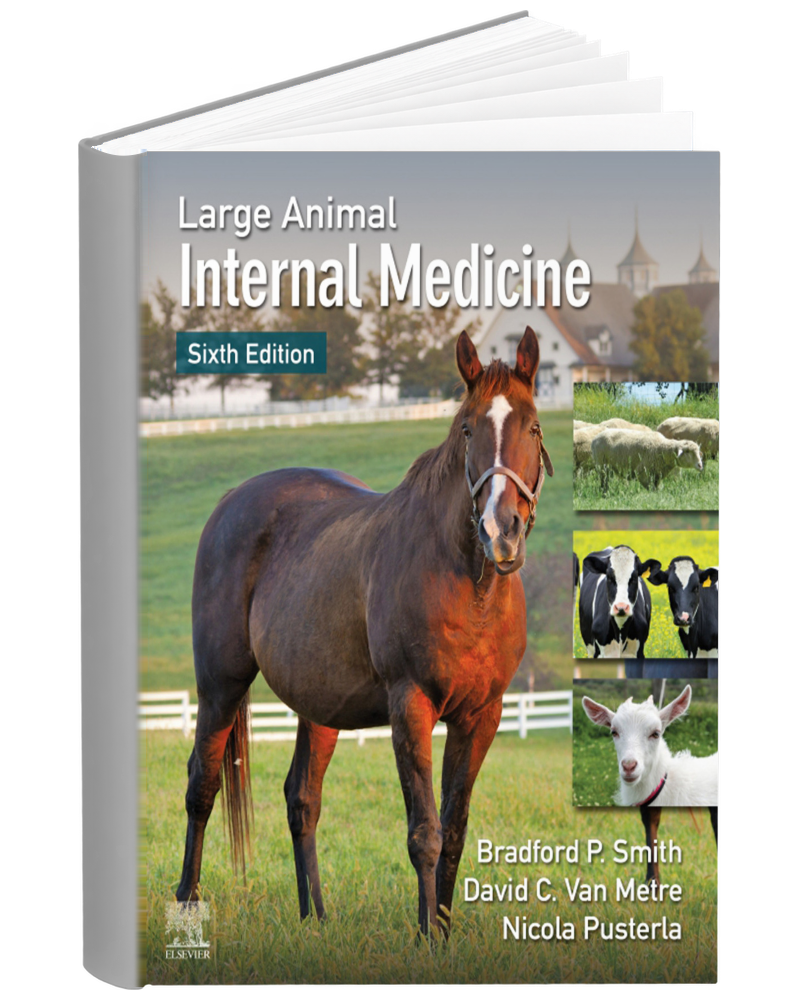
    Cover of Large Animal Internal Medicine 6th Edition PDF eBook
    FEATURED REFERENCE

    Large Animal Internal Medicine, 6th Edition

    Check the product listing for the edition and the actual digital offer.

    Reading purpose
    Species-specific disease assessment
    Suggested study sequence
    Begin with presenting signs and differentials for the animal before reading organ-system depth.
    Important boundary
    Human medical references do not replace veterinary guidance.

    This is a focused reading guide, not a comparison with titles absent from the current catalog. Confirm exact edition, available files, and syllabus requirements before ordering.

    Approach internal medicine by species and body system

    Veterinary internal medicine begins with species-specific physiology and a structured history and examination. Similar clinical signs can reflect different disorders in dogs, cats, horses and production animals; check the intended patient group before interpreting a textbook’s examples.

    Study gastrointestinal, endocrine, renal, respiratory and cardiovascular disorders by linking signs to possible mechanisms and diagnostic options. Use current veterinary sources when comparing medication safety or treatment, because species and comorbidities affect risk.

    Veterinary Internal Medicine book list

    Open a title to review its edition and book details. This list includes the published books currently assigned to Veterinary Internal Medicine.

    View Veterinary Internal Medicine covers and prices

  • Veterinary Diagnostic Imaging: Textbooks and Reading Guide

    Veterinary diagnostic imaging combines imaging principles with animal anatomy. Choose a reference with the species and modalities required by your course, especially when using an anatomical atlas alongside a clinical text.

    Key topics in Veterinary Diagnostic Imaging

    Use these topics to organize your reading and compare the scope of a textbook with your course or training requirements:

    • Species-specific radiographic anatomy
    • Imaging modalities and image quality
    • Systematic interpretation of animal images

    Who should use this reference, and how?

    The catalog currently offers a focused selection in Veterinary Diagnostic Imaging. Match its level and subject coverage to your actual learning task before choosing it.

    Cover of Thralls Textbook of Veterinary Diagnostic Radiology 8th Edition PDF eBook
    FEATURED REFERENCE

    Thrall’s Textbook of Veterinary Diagnostic Radiology, 8th Edition

    Check the product listing for the edition and the actual digital offer.

    Reading purpose
    Veterinary imaging practice
    Suggested study sequence
    Distinguish species and positioning before learning modality-specific image interpretation.
    Important boundary
    Human imaging assumptions should not automatically be applied to animals.

    This is a focused reading guide, not a comparison with titles absent from the current catalog. Confirm exact edition, available files, and syllabus requirements before ordering.

    Match veterinary imaging to species and clinical question

    Veterinary diagnostic imaging combines modality principles with differences in animal anatomy, positioning and handling. Begin by identifying the clinical question and the strengths and limitations of radiography, ultrasound or sectional imaging for the species involved.

    Use a systematic approach to normal anatomy before interpreting abnormalities. Compare textbook images with the age, body size and species of the patient. Safety, sedation, contrast use and interpretation should follow professional protocols.

    Veterinary Diagnostic Imaging book list

    Open a title to review its edition and book details. This list includes the published books currently assigned to Veterinary Diagnostic Imaging.

    View Veterinary Diagnostic Imaging covers and prices

  • Veterinary Critical Care: Textbooks and Reading Guide

    Veterinary critical care reading focuses on the assessment and monitoring of seriously ill animals. Match species coverage and professional level, and build on a sound foundation in veterinary physiology.

    Key topics in Veterinary Critical Care

    Use these topics to organize your reading and compare the scope of a textbook with your course or training requirements:

    • Critical illness and organ dysfunction
    • Patient monitoring and physiological assessment
    • Emergency and intensive care concepts

    Who should use this reference, and how?

    The catalog currently offers a focused selection in Veterinary Critical Care. Match its level and subject coverage to your actual learning task before choosing it.

    Advanced Monitoring and Procedures for Small Animal 2nd Edition PDF textbook cover
    FEATURED REFERENCE

    Advanced Monitoring and Procedures for Small Animal Emergency and Critical Care, 2nd Edition

    Check the product listing for the edition and the actual digital offer.

    Reading purpose
    Veterinary emergency and intensive care
    Suggested study sequence
    Connect physiological derangements with species-specific monitoring and emergency-care concepts.
    Important boundary
    Supervised veterinary practice and current protocols are required.

    This is a focused reading guide, not a comparison with titles absent from the current catalog. Confirm exact edition, available files, and syllabus requirements before ordering.

    Study critical care as continuous assessment

    Veterinary critical care requires rapid recognition of physiologic instability, with repeated assessment rather than reliance on a single result. Review airway, circulation, fluid status and organ function while accounting for species-specific normal ranges.

    Critical-care references can deepen understanding of shock, respiratory failure, sepsis and monitoring techniques. For each topic, connect pathophysiology with the information supplied by clinical examination and tests. Actual interventions require supervised veterinary practice.

    Veterinary Critical Care book list

    Open a title to review its edition and book details. This list includes the published books currently assigned to Veterinary Critical Care.

    View Veterinary Critical Care covers and prices

  • USMLE Preparation: Textbooks and Reading Guide

    USMLE preparation combines basic science review with clinical application. Select the edition and examination focus required for your study plan, and check whether the book provides explanatory review, questions or both.

    Key topics in USMLE Preparation

    Use these topics to organize your reading and compare the scope of a textbook with your course or training requirements:

    • Basic science integration
    • Clinical vignettes and reasoning
    • Question rationales and revision planning

    Choose a reference for your stage of study

    Step 1: foundations and integration

    Choose review resources covering the basic sciences and apply them alongside practice questions. A comprehensive pathology or physiology textbook can explain weak topics but should not be mistaken for a dedicated Step 1 review resource.

    Step 2 CK and Step 3: clinical decisions

    For Step 2 CK, prioritize clinical reasoning and examination-aligned questions; for Step 3, check management and longitudinal-care needs. The exams have distinct content outlines: confirm the current requirements and official sample materials on USMLE.org. Annual editions may differ; do not treat older and newer First Aid releases as equivalent.

    Compare the main choices before browsing the full list

    These are role-based examples from the live catalog, not universal rankings. Each entry notes what the resource is for and what it cannot replace.

    Step 1-oriented summary resource for 2026; does not replace question practice and official guidance.
    Older annual edition retained for those seeking that version; not interchangeable with the 2026 edition.
    Focused on clinical knowledge; check official exam content separately.
    Step 3-specific review; official case simulation practice remains important.
    Clinical knowledge supportStep Up to Medicine, 5th Edition
    General internal medicine reinforcement, not a dedicated replacement for every Step-specific resource.
    Explore mechanisms behind weak topics rather than treating it as a complete USMLE review.

    Build a Step-focused preparation sequence

    Step 1 connects basic sciences to clinically framed questions. Study physiology, pathology, pharmacology and microbiology together where they explain the same presentation. After reviewing each mechanism, describe how it would alter symptoms, laboratory results or treatment before testing yourself with a vignette.

    Step 2 CK emphasizes clinical reasoning, differential diagnosis and prioritizing management decisions. Step 3 extends this toward longitudinal care and independent decisions. Use a review book and practice material matched to the examination, and consult the official content outline to understand its scope.

    Maintain a question log that records why the correct answer fits, why a plausible alternative does not, and what you will revisit. Distinguish missing knowledge from errors in reading the stem or choosing an inappropriate next step. Revisit concepts after a delay and compare performance across organ systems, rather than relying only on total question counts.

    All USMLE Preparation books, grouped by purpose

    Browse the entire published subject shelf below. Group names are practical browsing aids, not fixed curricula or quality rankings; click a title to confirm the exact edition and offer.

    7 currently published USMLE Preparation titles, grouped by primary reading purpose. Titles may serve more than one role.

    Step 1: comprehensive review 3

    Step 2 CK: clinical review 1

    Step 3: management and independent practice 1

    Supporting basic sciences 1

    Additional titles and supporting references 1

    Browse USMLE Preparation covers and current prices