
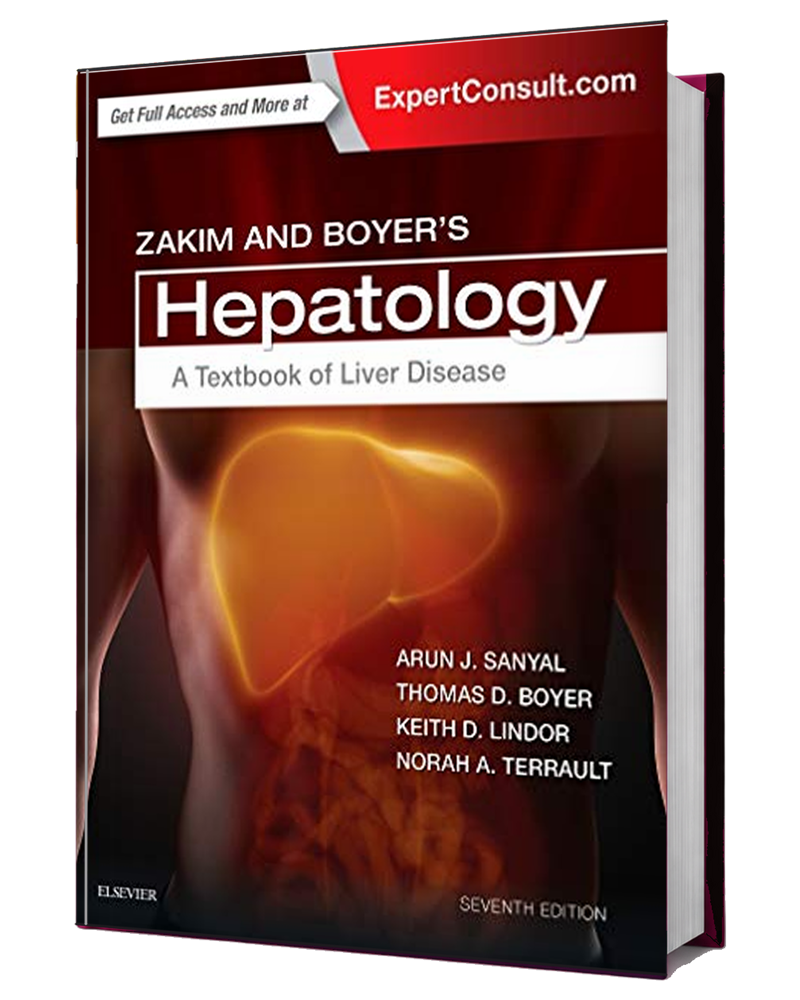
Overview: Zakim and Boyer's Hepatology A Textbook of Liver Disease 7th Edition PDF by Arun J Sanyal, Thomas D Boyer, Keith D Lindor and Norah A Terrault is offered here as a PDF eBook. Zakim and Boyer’s Hepatology connects liver function with the mechanisms and clinical manifestations of hepatic disease. The seventh edition brings basic science together with diagnostic and treatment discussions. Pathophysiological explanations help readers understand how injury changes the liver’s structure and activity. Clinical material places those mechanisms within the assessment of liver disease. Figures and tables support study of a specialty that draws on laboratory, imaging and tissue-based information. Its comprehensive approach makes it useful for learning the background to a focused hepatology question. Readers can study a mechanism first or return to the scientific explanation behind a clinical topic. The book provides substantial hepatology depth for advanced training, teaching and specialist reference reading.
About This 7th Edition
The book moves from hepatic anatomy and cellular function into the evaluation of liver disease, major disease groups, complications, transplantation and pediatric conditions. Readers can therefore approach a subject through the underlying biology or through a clinical question. A discussion of liver injury can be read alongside inflammation and fibrosis, while an investigation-focused study session can bring laboratory findings, imaging and histology together. This breadth distinguishes a specialist hepatology textbook from a brief handbook of diagnoses.
For a focused study session, begin with a problem such as jaundice or a complication of cirrhosis. Review the relevant mechanism, identify the questions raised by laboratory or imaging findings, and then compare the disease-specific discussion. Keeping separate notes for mechanisms, assessment and complications can help prevent a long topic from becoming a list of unrelated facts. When preparing a seminar or journal-club discussion, use the textbook to establish the background before turning to the assigned research paper.
Key Coverage & Sections Covered
- Liver function and injury: Cellular activity, bile physiology, immune responses, the intestinal microbiome and fibrosis.
- Assessment of hepatic disease: Jaundice, abnormal liver tests, disease progression, imaging, hepatic lesions and histological evaluation.
- Chronic disease and complications: Cirrhosis, portal hypertension, ascites, renal complications and acute or acute-on-chronic liver failure.
- Major disease groups: Viral hepatitis, alcohol-associated and metabolic disease, autoimmune disorders, vascular conditions and hepatic tumors.
- Specialist contexts: Transplantation, drug-related injury, pregnancy, inherited disorders and pediatric hepatology.
Who Uses This Book
- Hepatology Fellows
- Gastroenterology Fellows
- Practicing Hepatologists
- Practicing Gastroenterologists
- Internal Medicine (IM) Residents
- Medical Students (MDs/DOs) Undertaking Advanced Gastroenterology Study
- Liver Disease Researchers
- Hepatology Educators
Also suitable for related clinicians seeking detailed scientific and clinical background on liver disease, with this defined edition read alongside current professional guidance.
PDF Edition Features & Access
- Digital Format: PDF eBook for reading in compatible PDF applications.
- Reading Tools: Available reading and annotation tools depend on your PDF application and the supplied file.
- Edition Verification: Check the title, edition and ISBN against your course syllabus or reading list.
Questions about access, payment or reading your eBook? Visit our FAQs.
