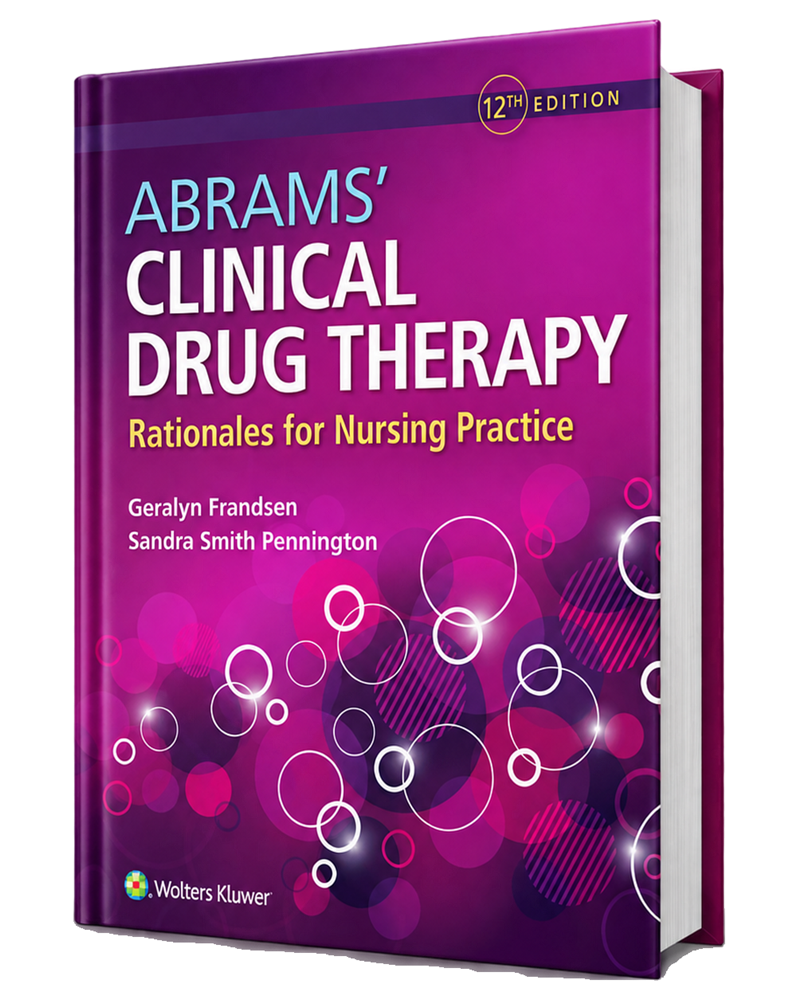
Overview: Abrams' Clinical Drug Therapy: Rationales for Nursing Practice 12th Edition PDF by Geralyn Frandsen & Sandra Smith Pennington is a nursing pharmacology text that connects drug mechanisms, medication administration, patient safety, clinical reasoning, and the nursing process. Geralyn Frandsen and Sandra Smith Pennington’s 12th Edition organizes pharmacotherapy across the lifespan and by body system, helping nurses understand not only what medications do but why and how drug therapy must be monitored in clinical practice. The twelfth edition organizes pharmacology for nursing practice by combining drug mechanisms with medication safety, clinical reasoning, patient assessment, administration, monitoring and teaching. It covers pharmacokinetics and pharmacodynamics, drug classes across body systems, therapy across the lifespan and the nursing responsibilities that accompany medication use. The text is especially useful for prelicensure nursing students who need to understand why medications are given and what the nurse must observe before, during and after therapy.
About This 12th Edition
The text begins with pharmacology foundations, quality and safety, pharmacokinetics and pharmacodynamics, medication administration, and the nursing process before moving through drug therapy in infants, children, adults, older adults, pregnancy, and reproductive health. Later sections cover medications affecting hematopoietic and immune systems, inflammation and infection, cardiovascular disease, respiratory conditions, renal and digestive systems, endocrine disorders, the nervous system, pain, psychiatric conditions, and sensory disorders. Case studies and nursing-focused rationales reinforce safe administration, adverse-effect monitoring, patient education, and clinical decision making.
This edition is useful for nursing students because it keeps pharmacology tied to the responsibilities nurses perform before, during, and after medication administration. Instead of memorizing drug names in isolation, readers learn how mechanisms, therapeutic effects, adverse reactions, contraindications, interactions, laboratory monitoring, patient factors, and education fit into safe drug therapy. The lifespan sections help explain why medication decisions differ in children, pregnancy, adults, and older patients, while the system-based organization supports course study and NCLEX preparation. The case-oriented approach also strengthens the transition from classroom pharmacology to bedside clinical judgment.
Key Coverage & Sections Covered
- Pharmacology foundations and medication safety
- Pharmacokinetics and pharmacodynamics
- Medication administration and nursing process
- Drug therapy across the lifespan
- Hematopoietic and immune-system drugs
- Anti-infective and anti-inflammatory therapy
- Cardiovascular and respiratory medications
- Renal, gastrointestinal, and endocrine drugs
Who Uses This Book
- Prelicensure Nursing Students
- Bachelor of Science in Nursing (BSN) Students
- Associate Degree in Nursing (ADN) Students
- Licensed Practical/Vocational Nursing (LPN/LVN) Students
- Students Taking Nursing Pharmacology
- NCLEX-RN Candidates Reviewing Medication Therapy
- Registered Nurses (RNs) Refreshing Pharmacology
- Clinical Nursing Instructors
- Nurse Educators Teaching Safe Medication Administration
Also suitable for other nursing learners, clinical educators, and healthcare practitioners who need an evidence-based reference on Abrams' Clinical Drug Therapy: Rationales for Nursing Practice linking assessment, clinical reasoning, interventions, and patient care.
PDF Edition Features & Access
- Digital Format: PDF eBook for reading in compatible PDF applications.
- Reading Tools: Available reading and annotation tools depend on your PDF application and the supplied file.
- Edition Verification: Check the title, edition and ISBN against your course syllabus or reading list.
Questions about access, payment or reading your eBook? Visit our FAQs.